
Electromechanical pinball (EM)
From the 1930s to the late 1970s, pinball machines were electromechanical. Their logic lived in relays, stepper units and switches, not in a chip. Scores were shown on mechanical reels that clicked round, and chimes or bells marked every point. Rules were simple by modern standards: light the lanes, hit the targets, reach a score for a replay.
EMs are loved for their sound and their honesty. Everything you hear is a physical part moving. They are also demanding to own: relays wear, contacts need cleaning, and a single stuck switch can stop a game.
Solid state and electronic arcade pinball
In the mid-1970s manufacturers moved the rules into microprocessors, and by the end of the decade almost every new table was solid state. The computer made deeper rules possible: memory between balls, layered modes, digital sound and speech and, from the early 1990s, dot-matrix displays with animations. This is what most people picture when they think of electronic arcade pinball, the loud, flashing machine at the back of an arcade or a bar.
Modern physical tables go further, with LCD screens in the backbox, network updates and online scores. They are still real machines, with a real ball, real magnets and real solenoids, and they are wonderful to play. They are also heavy, often well over a hundred kilograms, and new ones cost thousands.
Digital pinball: tables in software
Digital pinball (also called video or virtual pinball) simulates the whole machine in software: the playfield, the ball physics, the flippers and the rules. Home computers had pinball games from the early 1980s, and the 1990s brought a wave of much-loved PC tables that many players still remember. Today digital pinball ranges from careful recreations of licensed real machines to original tables that could not exist in wood and metal.
Because nothing physical has to be built, digital tables can do things real ones cannot: parts that move across the playfield, gravity that changes, a table that turns into its mirror image. The trade-off is feel. Software physics has to be tuned carefully to make the ball behave like a steel ball, and a screen cannot reproduce the thump of a solenoid.
Virtual pinball cabinets
Virtual pinball cabinets sit between the two worlds. They are full-size cabinets built around a large flat screen laid where the playfield would be, often with a second screen for the backglass, real flipper buttons, a plunger and sometimes feedback devices that knock and shake. Hobbyists build them to play many digital tables on one machine. They are impressive, but they take space, money and a lot of setup.
Browser pinball
Browser pinball is digital pinball that runs in a web page. Modern browsers can run compiled game code (WebAssembly) and draw with the graphics card (WebGL), so a full physics table loads in seconds without installing anything. It works on a phone, a tablet or a computer, and a link is all you need to share it.
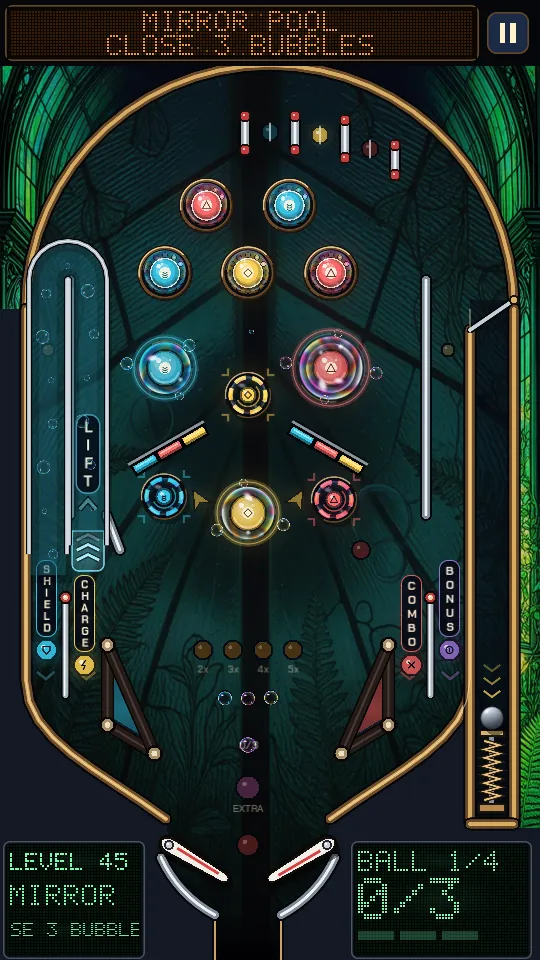
Bubble Pinball is built this way. It is made with the Godot engine and exported to the web, so the same game runs in any modern browser, adapts to portrait screens and is controlled by tapping each half of the screen or with the keyboard. Your progress is saved on your device and there is no account to create.
What makes digital pinball feel right
Good digital pinball is judged by the ball. It should roll heavily, lose speed on long ramps, bounce off rubber but not off metal, and come off a flipper at an angle you can predict. Three things decide it: the physics simulation, the flipper geometry and the delay between your finger and the flipper moving.
That is also the honest test for any pinball game you try, including ours. Trap the ball on a flipper: if it settles and stays, the physics are solid. Try a post pass and a nudge: if they work the way they would on a real table, the game respects pinball. If the ball floats or flippers fire late, no amount of lights will fix it. You can run that test on Bubble Pinball's first table in under a minute.
Which kind of pinball suits you?
There is no single best kind. It depends on what you want from a game:
- Electromechanical: the most authentic sound and feel, simple rules, but scarce, fragile and expensive to maintain.
- Solid state and modern physical tables: deep rules and the real thing under your hands; the best way to play if you have access to an arcade or bar, but costly to own.
- Virtual cabinets: many tables in one full-size machine, for enthusiasts with space and time to build.
- Digital pinball apps: cheap or free, huge variety, playable anywhere, with feel that depends on the quality of the physics.
- Browser pinball: zero install and instant start, ideal for a quick game on any device; the table has to be designed for a screen, not copied from wood.
Why Bubble Pinball is designed for the screen
Bubble Pinball does not try to copy an existing machine. It keeps what makes real pinball feel right, with real flipper geometry, slingshots, pop bumpers, ramps, a plunger, a ball saver and a tilt, and adds something only software can do well: colour. Rings paint the ball, and a bubble only breaks when a ball of its own colour hits it. That single rule turns every shot into a small plan.
The free campaign has 100 tables in five worlds, each ending with a mini-boss and a boss, and boss tables play in phases that change the rules. Later worlds add mechanisms such as a subway, a conveyor belt, low-gravity zones and a black hole. Some breaks show an ad, which keeps it free. Optional Table Packs add whole new machines for players who want more.

Frequently asked questions
What is digital pinball?
Pinball simulated in software: the playfield, ball physics, flippers and rules run on a computer, console, phone or in a browser instead of in a physical cabinet.
What is the difference between electromechanical and solid state pinball?
Electromechanical machines run on relays and mechanical score reels. Solid state machines, common from the late 1970s, run their rules on a microprocessor, which allows deeper rules, sound and displays.
Is browser pinball as good as a real machine?
Nothing replaces a real table, but a well-tuned browser game gives you true flipper control, trapping and nudging with no install and no cost, on any device.
Do I need to download Bubble Pinball?
No. It runs in your browser. Open the Play page and it loads in a few seconds on phone, tablet or computer.